
By Matthew Ross, Executive Director, The Botanic Garden at Historic Barns Park and NMNLA Director-at-Large
We have all been there before: whether it was pushing the boundaries of a plant not hardy for our zone that we thought could make it or having a Hosta roast in an area that we thought had a bit more shade. Everyone has had hiccups in the landscape that have taught us valuable lessons. You are probably hearing everyone’s favorite plant professor, Dr. Bob Schutzki, saying his famous tagline, “Right plant, right place.” Learning from our past failures is part of growing as a leader in the horticultural industry, and the aim of this new segment of the NMNLA Newsletter is to share some of our failures when we plant either the wrong plant or choose the wrong place for a planting.
The goal is to learn from each other’s mistakes and provide solutions on best planting strategies to ensure success. I am happy to provide the first example for the segment which we will keep anonymous in future iterations. Please feel free to submit your pictures and description for the scenario for our next newsletter.
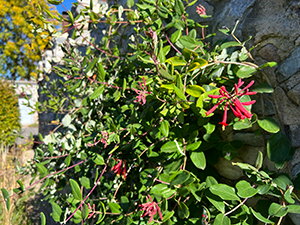
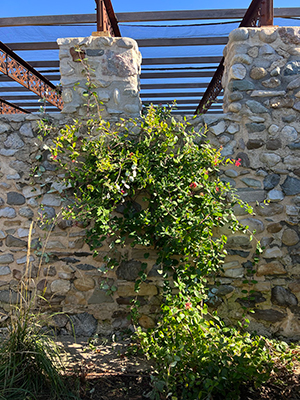
Red Trumpet Creeper, Lonicera sempervirens, has held the spot as one of the hottest vines this past decade. Known for its durability and incredibly long bloom period, often spanning summer through the first chilling frost, the vine has been more popular at plant nurseries and garden centers across the Midwest and Eastern United States. This year, the Garden Club of America awarded Lonicera sempervirens the Freeman Award of Excellence as the top native plant for 2022.
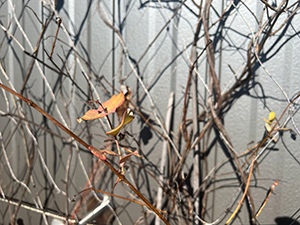
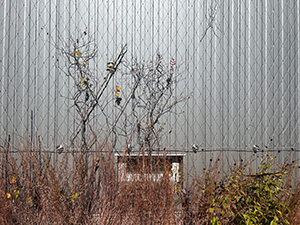
At The Botanic Garden at Historic Barns Park there are several plantings of the award-winning red flowering vine. One area where it was planted was along the exterior wall of the visitor center. With heavy dieback and curling brown leaves, this planting was in complete decline all throughout the year. What could be the problem? Is this the wrong plant or is it the wrong place? Our other planting locations were thriving and had little to no dieback.
I found out that this was the second time the vine in decline had been re-planted in our Native Garden. We brought out the shovels and found out it may not have been the wrong plant, but it was a wrong place/placement after all. The majority of the planting area was made up of gravel and heavy clay which had been waterlogged despite the summer drought. Additionally, the planting was intended to cover up a southern wall and planted on a metal support. These combined factors led me to believe there might be hope for modifying the planting environment to help the plant better establish where the other vines had previously failed. I also thought about what alternatives could be a better plant for this location, including Virginia Creeper (Parthenocissus quinquefolia) or Virgin’s Bower (Clematis virginiana) as potential replacements. Both would need the soil amendments and a partial shade structure erected to limit the amount of radiated heat reflecting off of the building and could be problematic in terms of their spread well outside the desired footprint of the planting.
In this scenario, it was more “right plant, wrong location.” We would love to hear more stories about landscape fails and solutions you are experiencing in the landscape. Please submit some of your examples for upcoming Wrong Plant, Wrong Place articles by emailing me at: matthew@thebotanicgarden.org